Cuba

Cuba

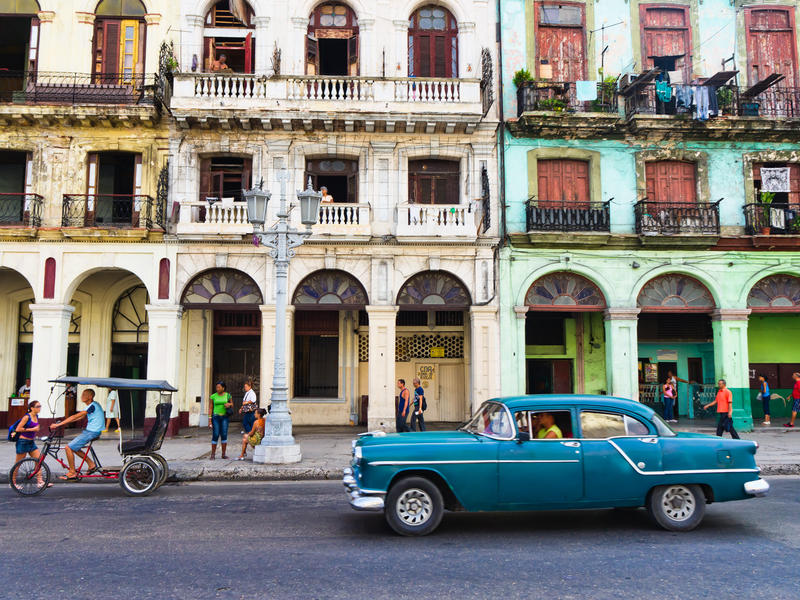
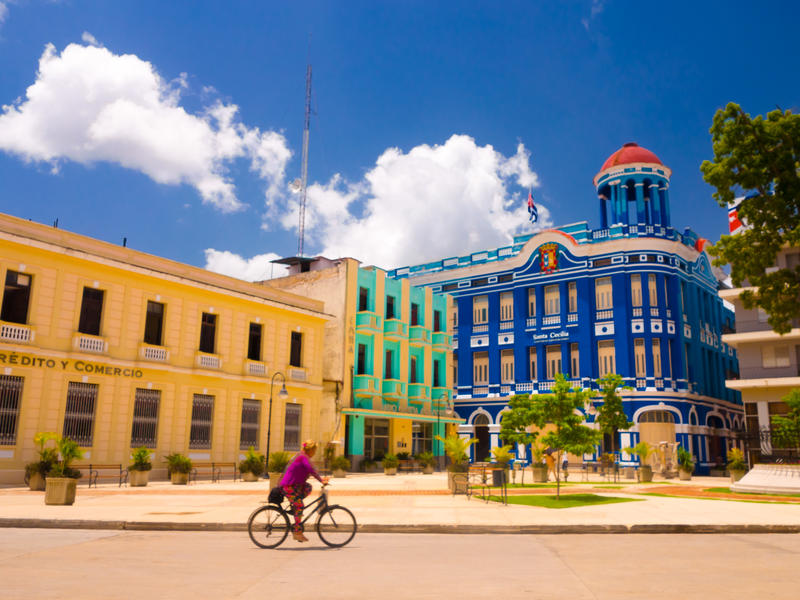
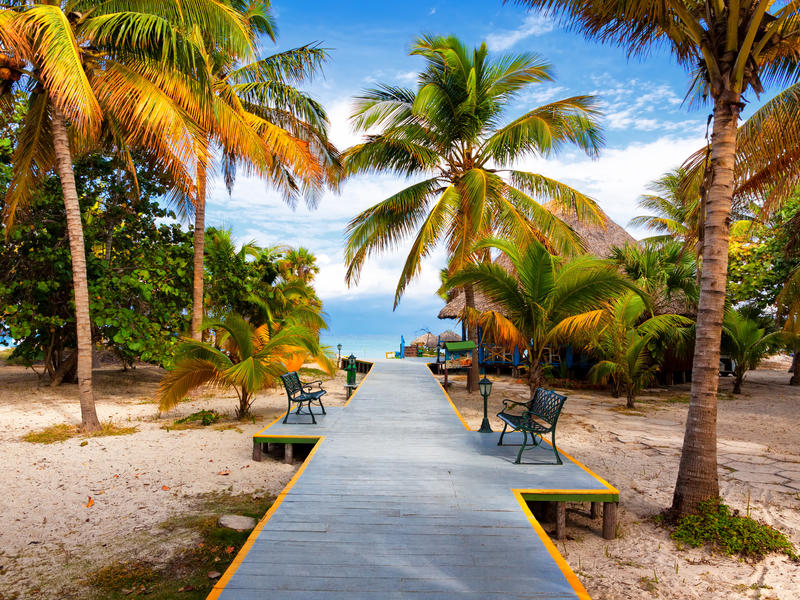
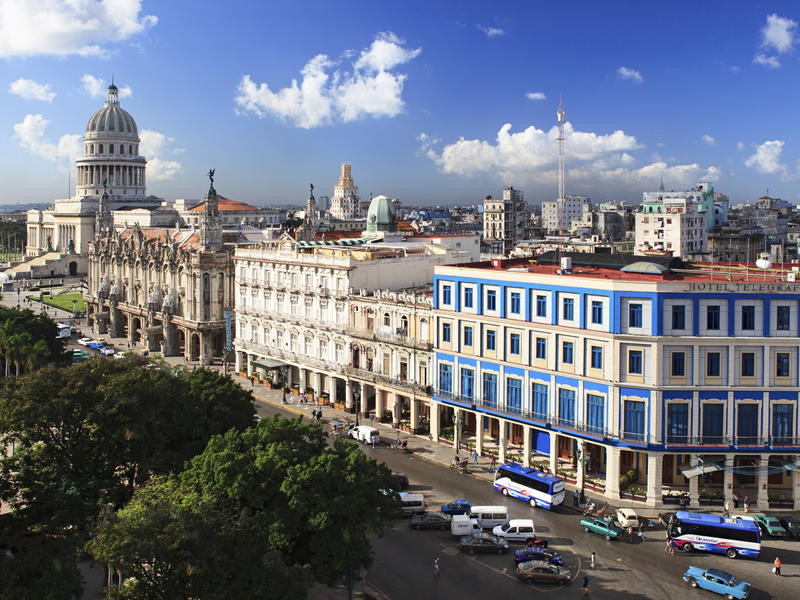
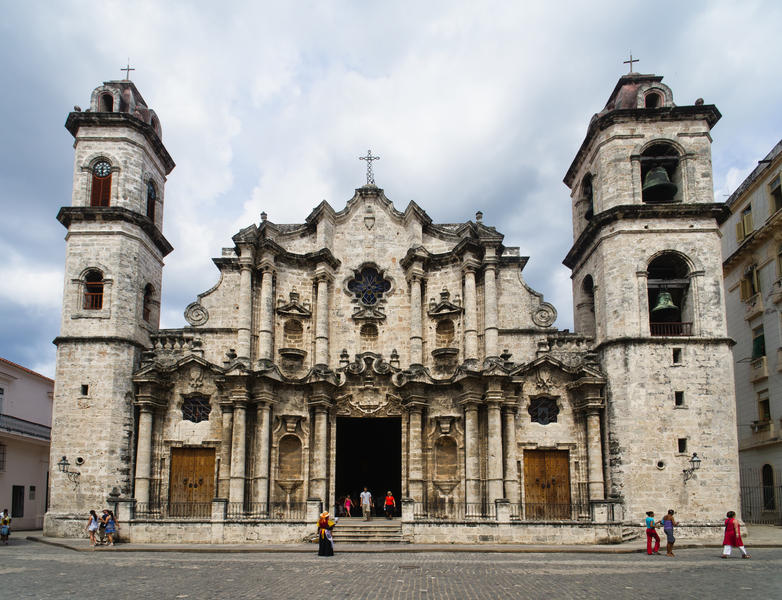
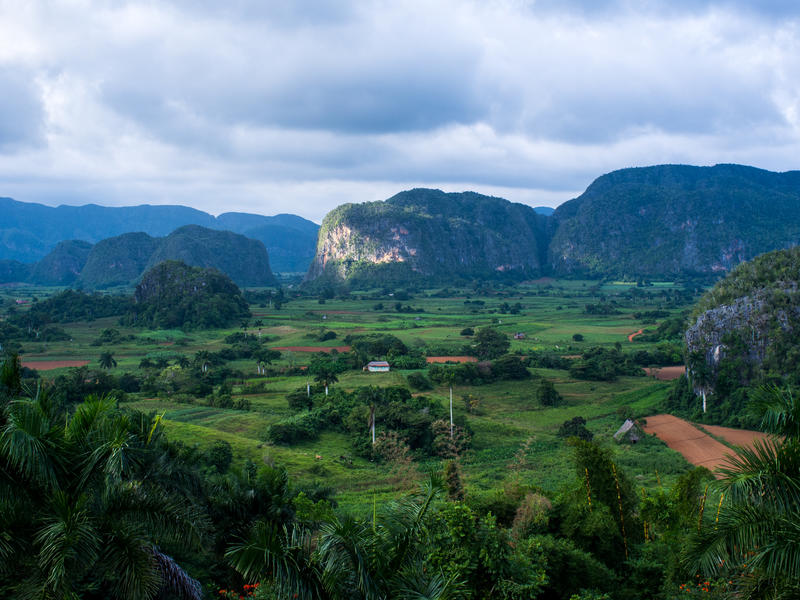
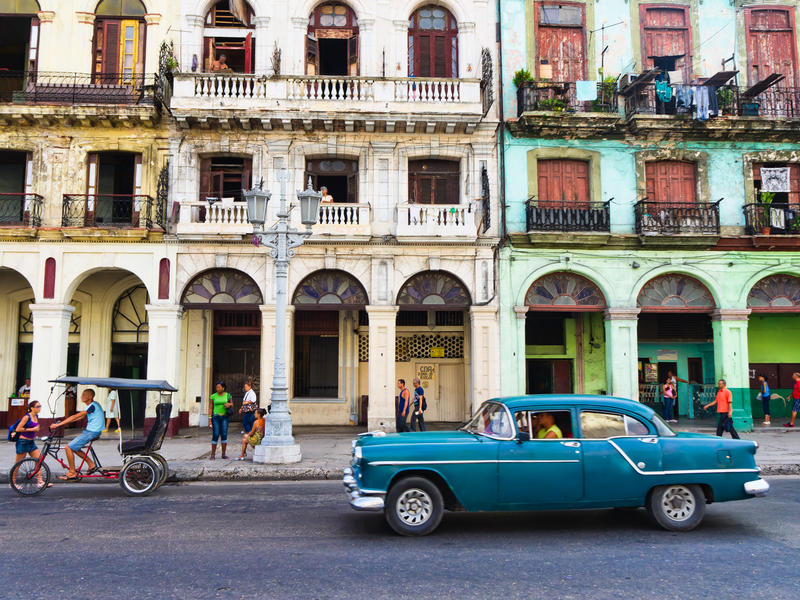
Cuba’s turbulent past and defiant political stance have imbued it with an undeniable mystique – but beyond its historical intrigue, there’s plenty more to discover and enjoy about this unique travel destination. The island is like one of its ubiquitous vintage cars – shabby but chic, erratic and unpredictable, and ultimately loveable. Fine cigars, salsa dancing, Afro-Latin beats – all these things and many more contribute to Cuba’s one-of-a-kind flavour. Highlights include the glittering capital city, Havana, where you can dance the night away in salsa clubs, or marvel at the crumbling beauty of colonial buildings on a stroll through town; the laid-back little town of Vinales, surrounded by tropical landscapes studded with bulbous limestone karsts; the terracotta buildings of historical Trinidad; and picture-perfect beaches at Varadero, and on the islets of Cayo Guillermo and Cayo Largo del Sur.


Read More: Cuba

Fast Facts

Regions:

Travel Styles:


Regions


  • Havana
  • Placeholder image

Travel Information


General

CommunicationsThe international access code for Cuba is +53.InternetMore than 50 major hotels and resorts across Cuba offer WiFi, with hourly rates varying…

Electricity

Generally Cuban electricity is 110V with the square American plug socket. Some hotels have 220V and round sockets.

Banking

CurrencyThe CUP (also locally known as “moneda nacional” or MN) is the primary Cuban currency. It is used by both residents and visitors alike.  The…

Cuisine

The tap water is not safe to drink. Bottled water is ubiquitous, but boiling water is recommended to limit plastic waste. Milk is pasteurised and dairy…

Climate

Cuba has a fantastic climate for adventurers, travellers and tourists alike. Cuba can be described as moderately subtropical with 2 seasons. The dry season,…

Transport

Perhaps one of the most important parts of planning a trip to Cuba involves figuring out exactly how you’ll get around once you’re there.Cubana (tel: (07)…

Dress

Cuba is a sub-tropical country so pack for summer. Bikinis, shorts, sandals, short-sleeved cotton dresses and shirts are the order of the day. A night…

Health

Please consult your health-care provider 4-6 weeks prior to travel to ensure you are receiving all required vaccinations and that the medication has…

Safety

Cuba is safe in general. We recommend normal precautions be taken as you would for any city in the world. Be aware of your surroundings and stay in well-lit…

Visa

Tourist travel to Cuba remains prohibited for US citizens. You must obtain a license from the Department of Treasury or your travel must fall into one…


Related Tours


  • Dear David Do you remember us? We spent our holyday in Namibia in 2007 following your itinerary. This email is to inform you, that advertising of your agency is now shown in the italian travel web magazine Viaggionelmondo.net In this…

    Carla and Riccardo

  • We just came back from a safari in Botswana, Namibia and Zambia, which was organised by Charlotte at ATI Holidays. We had a truly fantastic time, and would like to thank them for their help in organising it all. The…

    Matthew Haler

General

CommunicationsThe international access code for Cuba is +53.InternetMore than 50 major hotels and resorts across Cuba offer WiFi, with hourly rates varying from CUC$2 to $10 (US$2 to $10).As of January 2016, ETECSA also offers 65 public WiFi hotspots. WiFi access costs US$2 per hour. Like at the telepuntos, you need to purchase an access ticket from ETECSA before you can log on to the WiFi network.Mobile TelephonesSome U.S. carriers have or are beginning to make agreements with ETECSA (the Cuban national telecommunications company) to provide roaming services in Cuba. Sprint and Verizon, for example, currently offer roaming services in Cuba. If your carrier offers a roaming plan and your mobile phone is capable of roaming in Cuba, you should ask your carrier about any additional charges for voice calls, data, and outgoing text messages that you may incur during your trip. The telecommunications market in Cuba is changing rapidly, so before you travel, be sure to check with your wireless provider for the latest developments.Another way you can use your U.S. mobile phone in Cuba is to rent a SIM card. If you have an unlocked GSM-capable mobile phone, you can rent a SIM card from Cubacel (ETECSA's mobile phone arm) that will allow you to use your mobile phone in Cuba. Cubatel's SIM cards come with pre-paid minutes in amounts of 10, 20, or 40 Cuban convertible pesos (CUC$) (US$10, $20, or $40), plus a daily rental fee for the SIM card of CUC$3 (US$3). The per-minute call charges and texting fees for renting a mobile phone (as listed below) also apply to renting a SIM card. Contact your wireless provider to check whether your mobile phone operates on the compatible standard and request that your carrier unlock your mobile phone.Language:The official language is Spanish. English is not commonly used, so be sure to pick up some basic Spanish words before your trip.National Emergency Numbers:General Emergency 106Ambulance 104Fire Service 105Public Holidays:The dates of certain public holidays change from year to year – refer below. If a public holiday falls on a Sunday, then the Monday is also declared a public holiday.Jan 01- Liberation DayJan 02- Victory of Armed Forces DayMar 19- San JoseMay 01- May DayMay 20- Independence DayJuly 25- National Rebellion DayOct 10- Anniversary of the Beginning of the War of IndependenceDec 25- Christmas DayTime Zone:Cuba is on Greenwich Mean Time and is the same time of USA Eastern Time Zone.TIPPING SUGGESTIONSIt is our recommendation that the quality of service should determine the extent of any gratuity. We are pleased to provide you with the following guidelines. Please feel free to offer more if you receive superlative service.Drivers & One Day Guides:About 5-8 CUC per dayImportant the driver guide or driver will normally remove himself at meal times. However this time can be awkward for both guides and clients so if the clients would like to invite the guide or driver to join them they should make it very clear and would be expected to pay for the meal.Transfers:10% of the fare.Restaurants:Generally there are three options, outlined on the menu.· A Service Charge of x % will apply" - this means what it says, your final bill will be subject to an additional charge; no further tips are necessary.· "Service included" - this means that the prices are a flat rate, no tips are required and the prices are final. Again if the server has been attentive few CUC left on the table will always be appreciated.· If none of these apply servers will usually expect a tip of around 10%Housekeeping:For excellent or unusual services 1 CUC a day is appropriate. We do suggesting tipping housekeepers on a daily basis, rather than at the end of your stay.Taxis:10% of the fare.Bars:1 CUC per drink.US EMBASSYMailing Address: Calzada between L & M Streets, Vedado, HavanaTel: +53 7 831 4100Website: havana.usembassy.gov

Electricity

Generally Cuban electricity is 110V with the square American plug socket. Some hotels have 220V and round sockets.

Banking

Currency

The CUP (also locally known as “moneda nacional” or MN) is the primary Cuban currency. It is used by both residents and visitors alike.  

The CUP is available in bills of 1, 3, 5, 10, 20, 50, 100, 200, 500, and 1000. 

Cuba used two official currencies until December 31st, 2020: the CUP (Cuban Peso) and the CUC (Cuban Convertible Peso). However, it all changed in January 2021, when Cuba eliminated the CUC and left the CUP as the only official Cuban currency. Therefore, as a traveler, you will use the CUP. As of January 1st, 2021 and the Cuban Peso (CUP) became the only official currency in Cuba. If you travel to Cuba before mid 2021, you may still see some CUCs in circulation because Cuban residents have until July 2021 to exchange their remaining CUCs into CUPs. 

All resorts, hotels, airports, restaurants, and tourist attractions will accept CUP. Officially, you can use US dollars, Canadian dollars, and Euros ONLY at airports in Cuba.

Banking

Banking hours: Mon-Fri 08h30-12h00 and 13h30-16h00, Sat 08h30-12h00. Hours may vary and banks may be open all day in larger cities.

MasterCard and Visa credit cards are increasingly accepted, provided they are not issued by a US bank, or a bank with links to the USA, but hefty fees are often added. ATMs are fairly common but not ubiquitous. However, cash can be obtained in banks and Cadecas with non-US Visa credit and Visa debit cards.

Travellers cheques in US Dollar, Pounds Sterling and other major currencies are accepted; US Dollar cheques issued by US banks are not accepted but American Express travellers cheques issued by non-US banks can be exchanged, though not everywhere. It is recommended to take cheques in a currency other than US Dollars.

Cuisine

The tap water is not safe to drink. Bottled water is ubiquitous, but boiling water is recommended to limit plastic waste. Milk is pasteurised and dairy products (with the exception of some cheap ice creams) are safe for consumption. Local meat, poultry, seafoods and fruit are generally considered safe to eat.

Surprisingly for an island so rich in marine life, fish and seafood rarely top the menu - most seafood is exported. Cuisine is a mix of Spanish and Afro-Caribbean, heavily reliant on rice, beans, chicken and pork. Depending on the season, fresh vegetables may be hard to come by - as a rule, the hotter the month, the more limited the selection. Furthermore, flavours are limited by the lack of available herbs and spices and many visitors are surprised that Cubans shun spicy food of all kinds. Food preparation relies heavily on the frying pan and deep fat fryer. Some of the best cooking, and often an illegal lobster or two, is found in paladares (small, private restaurants). In state-run establishments, service can be painfully slow and sometimes even surly.

A 10% tip on restaurant bills is common.

Climate

Cuba has a fantastic climate for adventurers, travellers and tourists alike. Cuba can be described as moderately subtropical with 2 seasons. The dry season, which runs from November to April is less humid and cooler, with average highs of 26-29C and lows of 18-20C. Summer temperatures average 32C with high humidity. The average water temperature is a very comfortable 25C along the coast.

Hurricane season in Cuba is between June and November, with most storms occurring in September and October.

If you are planning to travel to Cuba during Hurricane Season, Locally Sourced Cuba Tours still operates, however itineraries are subject to change during these months.

Transport

Perhaps one of the most important parts of planning a trip to Cuba involves figuring out exactly how you'll get around once you're there.

Cubana (tel: (07) 834 4446; www.cubana.cu) and AeroCaribbean (www.fly-aerocaribbean.com) are the principal carriers, operating flights between Havana and Santiago de Cuba, Holguín and Cayo Coco.

Renting a vehicle in Cuba is relatively easy and common among tourists. If you choose to go this route, however, there are plenty of things to keep in mind first if you want to remain in one piece on the road.

All car hire companies are state-owned. Prices are negotiable up to a point, but expect to be delayed when picking up the vehicle. It may be easier and has proven to be cheaper to book car hire through a specialist tour operator in your own country.When picking up the car, be sure there is a spare tire and jack, and consider snapping a date-stamped picture of any existing damage to avoid disputes upon drop-off. A valid national driving licence will be required.

By most accounts, driving in Cuba can be rough. This is due in part to the poor conditions on many secondary roads, which can be narrow, winding and riddled with potholes. Add to this the lack of adequate street signage and you've got a confusing and potentially dangerous situation.

Driving at night can be particularly risky since many roads are poorly lit (or not lit at all). Additionally, it's not uncommon to come around a bend and find pedestrians, cyclists or even livestock in the road, so drivers should exercise caution.

Another thing to look out for is traffic lights, which are often placed to the far corner of intersections. This can be hazardous because if you're not expecting to come upon one, you may find yourself stopped dangerously in the middle of the crossing.

Knowing the dangers of actually getting behind the wheel in Cuba, it's not surprising that many tourists choose to use taxis to get around instead. There are certainly plenty available for hire, but should you choose this particular mode of transportation, take into account the following so that you do so safely. First and foremost, avoid taking rides with unlicensed taxis. They are often driven by thieves who are out to pick up and rob passengers. Be particularly careful of fare amount when hiring a taxi, especially in Havana.

If possible, ask someone who is native or at least familiar with the system how much the fare should be prior to heading to your destination. This way you will know beforehand how much the driver should be charging you and can avoid be scammed out of an exorbitant fee by a dishonest driver.

If you can't confer with a local, insist that the meter be used to remove any doubt.

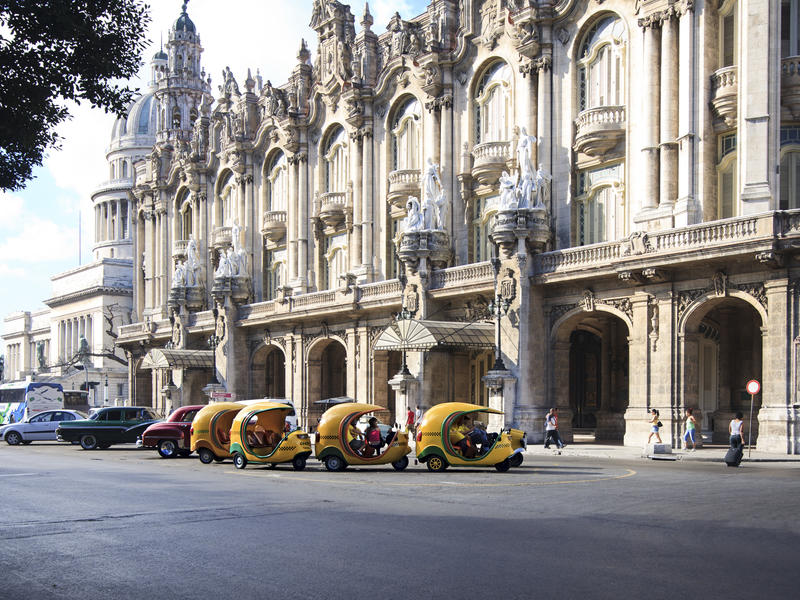
One of the more unique types of transportation in Cuba is the "Co-Co" taxi, a three-wheeled vehicle that is generally yellow in color and contains a flimsy hood. These are basically just glorified motorcycles that have been modified to carry passengers.

Because they can reach speeds of up to 40 mph and lack any sort of safety features, including seatbelts, "Co-Co" taxis can be pretty dangerous.

They are, nevertheless quite popular with tourists so if you choose to ride on one, be aware of the risk.

The lack of traffic makes Cuba a popular choice for cycling tours. Bicycles can be rented in Havana from a number of bike hire companies.

There are a number of options when it comes to bus travel within Cuba. Many are specifically designated for tourists and travel conveniently within and between cities.

This mode of transportation is pretty reliable and clean, although some of the more heavily used buses are beginning to show their wear.

One thing to keep in mind when selecting bus as a mode of transportation is that they can be quite crowded and therefore can be haven for pickpockets. Keep your valuables well concealed and bags zipped and stored in front of you, just in case.

Travel by train is not the most reliable form of transportation in Cuba, mainly due to the lack of quality equipment. Still, there are a few dependable train lines that run between Havana and Santiago de Cuba.

There are also additional lines throughout the country with stops at Camagüey, Santa Clara, and the cities of Manzanillo, Cienfuegos, Sancti Spiritus, Pinar del Rio and Morón. Keep in mind that while a few trains offer first class options, none of them provide sleeper cars.

Additionally, food and drink are not typically served so plan accordingly. With the poor equipment quality of many of the trains, you may find yourself stuck for hours awaiting the car's repair. And while aboard, be sure to keep a close eye your belongings. Luggage is frequently stolen from train cars in Cuba.

The only destinations in Cuba serviced by water routes are Isla de la Juventud on a daily ferry from Batabanó south of Havana, and Cayo Levisa, as part of accommodation packages to that key off the northern coast. Additionally, there is a commuter ferry crossing Havana harbour several times daily between Havana and Casablanca.

Dress

Cuba is a sub-tropical country so pack for summer. Bikinis, shorts, sandals, short-sleeved cotton dresses and shirts are the order of the day. A night out at Tropicana or La Guarida restaurant needs something smart if not overly formal.

Bring some warm clothing (long sleeves, a sweater or fleece), since there is nothing more frustrating then being frozen to death in a tropical country! Lightweight rain gear is suggested if you are coming in the summer.

Health

Please consult your health-care provider 4-6 weeks prior to travel to ensure you are receiving all required vaccinations and that the medication has enough time to take effect. We highly recommend the purchase of travel insurance with medical benefits and that you bring any personal medication with you. Please also check with your health department prior to departure for any changes in health regulations.

Medical care in Cuba does not meet U.S. standards. While doctors are generally competent, healthcare facilities face shortages of critical medications and supplies. Many routine medications are also unavailable. Travelers should bring an adequate quantity of all prescribed medicines and necessary over-the-counter medications in their original containers. Copies of prescriptions and letters from prescribing physicians may facilitate entry.

Diarrheal illness is common among travelers, even in luxury accommodations. Travelers should wash their hands, drink bottled water and avoid street and under-cooked food.

The following diseases are prevalent:

Zika Virus
Dengue Fever

Safety

Cuba is safe in general. We recommend normal precautions be taken as you would for any city in the world. Be aware of your surroundings and stay in well-lit areas. Don’t flash wealth. If you have items of sentimental value, leave it at home. Visitors should avoid all political gatherings and demonstrations.

Visa

Tourist travel to Cuba remains prohibited for US citizens. You must obtain a license from the Department of Treasury or your travel must fall into one of 12 categories of authorized travel. Non U.S. citizens should consult with your local embassy.