New Zealand

New Zealand

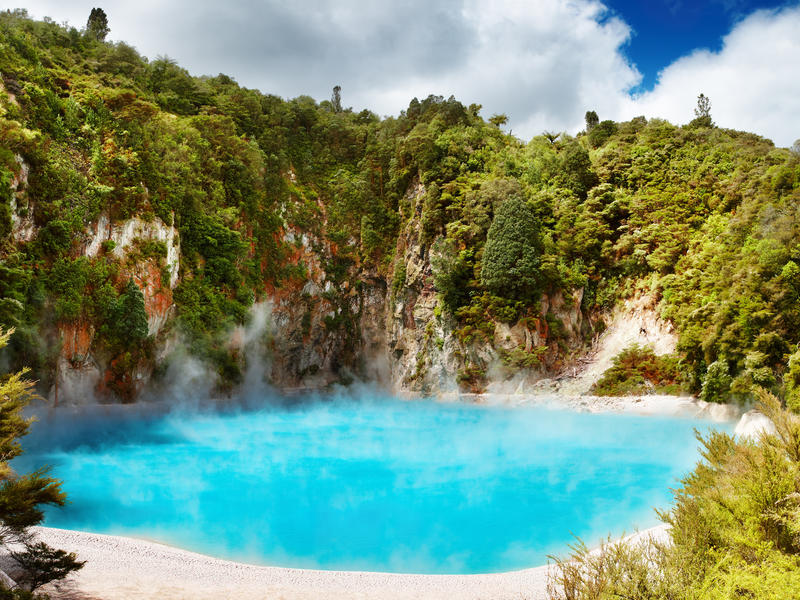
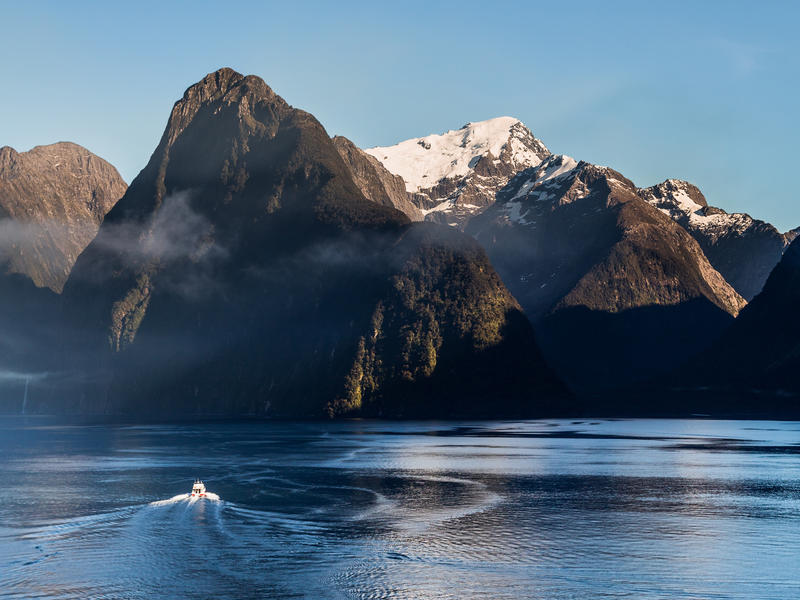
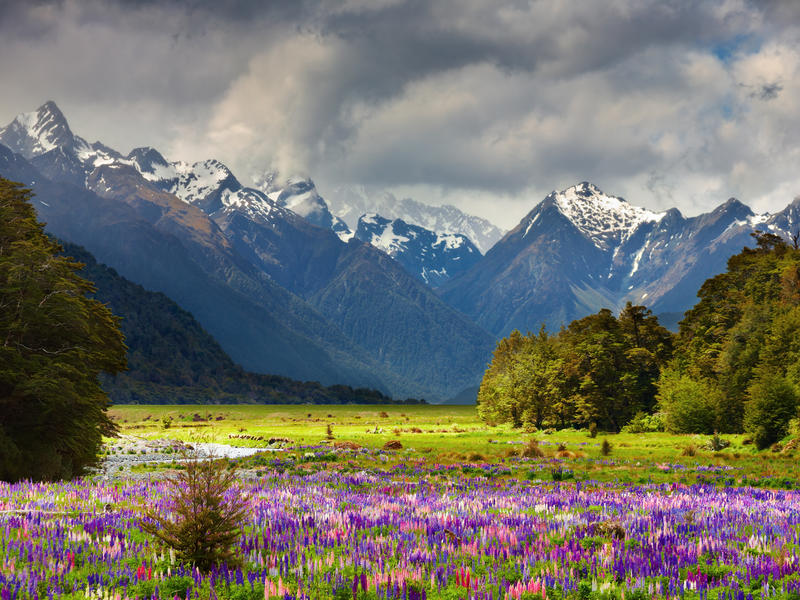
There aren't many places on this planet where travellers are so well catered for – in terms of both man-made enticements and splendours of the natural realm. New Zealand is bigger than the UK, with one-fourteenth the population size. Filling in the gaps are sublime forests, majestic mountains, and the stunning lakes, beaches and fjords that have made this country one of the best hiking (locals call it 'tramping') destinations on Earth. It’s renowned worldwide for having a relaxed, friendly, spacious and outdoor adventure lifestyle (think sport, walks, BBQs, and beaches). When you combine this adventurous outlook with a stunning backdrop you start to see why travellers rate New Zealand as the action/adventure/adrenalin capital of the world!

Read More: New Zealand

Regions


  • Placeholder image
  • Placeholder image
  • Placeholder image
  • Placeholder image
  • Placeholder image
  • Placeholder image
  • Placeholder image
  • Placeholder image

Travel Information


General

Language:The official language is English.National Emergency Numbers:Dial 111 for all emergencies.Public Holidays:The dates of certain public holidays…

Electricity

Plug Type: Type I Voltage (V): 230V Frequency Hertz (Hz): 50Hz *Travel plug adapter and voltage converter might be necessary depending on…

Banking

Currency Local currency: New Zealand Dollar Symbol: NZ$ ISO code: NZD Subunit: Cent Banknotes: NZ$5, NZ$10, NZ$20, NZ$50, NZ$100 Coins:…

Cuisine

Food and water safety: Can you drink the tap water: Yes Fresh fruit and veg: Yes Ice: Yes Meat: Yes Street food: Yes Local…

Climate

Annual rainfall: Varies by region Average temperature: 10-20°C Summer: Average highs: 20-30°C Average lows: 10-15°C Winter: Average…

Transport

Air: Main airlines: Air New Zealand, Jetstar Airways International Airports: Auckland Airport, Christchurch Airport, Wellington Airport Domestic…

Dress

Spring and Summer Cool, light, breathable and comfortable: Yes Lightweight warm clothes: No Winter and Autumn Jerseys, cardigans, sweaters,…

Health

Please consult your health-care provider 4-6 weeks prior to travel to ensure you are receiving all required vaccinations and that the medication has…

Safety

New Zealand is generally a very safe place to travel with a relatively low crime rate, few endemic diseases and a great healthcare system. Visitors are…

Visa

U.S. citizens are required to obtain a visa for entry into New Zealand. Non U.S. citizens should consult with your local embassy. As of Oct. 1, 2019,…


Related Tours


  • Dear David Do you remember us? We spent our holyday in Namibia in 2007 following your itinerary. This email is to inform you, that advertising of your agency is now shown in the italian travel web magazine Viaggionelmondo.net In this…

    Carla and Riccardo

  • We just came back from a safari in Botswana, Namibia and Zambia, which was organised by Charlotte at ATI Holidays. We had a truly fantastic time, and would like to thank them for their help in organising it all. The…

    Matthew Haler

General

Language:The official language is English.National Emergency Numbers:Dial 111 for all emergencies.Public Holidays:The dates of certain public holidays change from year to year – refer below. If a public holiday falls on a Saturday or Sunday, then the Monday is also declared a public holiday.Jan. 01 - New Year's DayJan. 02 - Day after New Year's DayFeb. 06 - Waitangi DayApr. 14 - Good Friday (Date varies every year, falls on the Friday before Easter)Apr. 17 - Easter Monday (Date varies every year, falls on the Monday after Easter)Apr. 25 - ANZAC DayJune 05 - Queen's Birthday(Date varies every year, falls on first Monday in June)Oct. 23 - Labor Day (Date varies every year, falls on fourth Monday in October)Dec. 25 - Christmas DayDec. 26 - Boxing DaySocial conventions:With a patchwork history of Māori, European, Pacific Island and Asian cultures, New Zealand has become a melting-pot population - but one with some uniting features that make it unique in the world.Today, of the 4.4 million New Zealanders (informally known as Kiwis), approximately 69% are of European descent, 14.6% are indigenous Māori, 9.2% Asian and 6.9% non-Māori Pacific Islanders.Geographically, over three-quarters of the population live in the North Island, with one-third of the total population living in Auckland. The other main cities of Wellington, Christchurch and Hamilton are where the majority of the remaining Kiwis dwell.It suffices to say that getting to know New Zealand’s relaxed and friendly people will be one of the things you love most about your visit. Strike up conversations along your journey - a casual chat at a bar or restaurant or at a local market - it’s the best way to get insider knowledge on the area you’re visiting and you may even pick up the local Kiwi lingo and make new life-long friends!VAT (customize):VAT of 10% is levied on all goods and services. When leaving Botswana, non-residents may claim a VAT refund on goods exported as accompanied luggage. The value of the goods must exceed P 5,000 per export and goods must be available for inspection. Refunds are made by way of a check payment which is mailed. In order to claim, the original tax invoice with passport details reflected thereon, must be presented to the designated Customs Officer together with the VAT 006.1 claim form and the BW500 export declaration form.Time Zone:New Zealand has two time zones. The main islands use New Zealand Standard Time (NZST), 12 hours in advance of Coordinated Universal Time (UTC) / military M (Mike), while the outlying Chatham Islands use Chatham Standard Time (CHAST), 12 hours 45 minutes in advance of UTC / military M^ (Mike-Three).During summer (last Sunday in September until the first Sunday in April) daylight saving time is observed and clocks are advanced one hour. New Zealand Daylight Time (NZDT) is 13 hours ahead of UTC, and Chatham Daylight Time (CHADT) 13 hours 45 minutes ahead.TippingWhile tipping is customary for certain services in America, it isn’t common in other places around the world - like New Zealand. In the States, waiters and waitresses often make less then minimum wage and rely heavily on tips to make a living, but in other countries, workers are paid a better wage and so tips are often not expected or necessary. However, in certain situations and in touristy areas in New Zealand, tipping is more common for exceptional service. So when do you tip and how much?RestaurantsRestaurant workers do not work only for tips in New Zealand, so do not feel obliged to leave a tip when paying your check. If the service was excellent, leaving a 10% gratuity is more than generous and your waiter or waitress will certainly appreciate it.Taxi DriversTipping taxi drivers in New Zealand is not a common practice. If you attempt to tip your driver, it may even be refused. It is common to leave your change for the driver, if for no other reason than making the paying process easier. If you insist on tipping the driver, 10% or less is reasonable, but do not be surprised if they refuse to accept your tip.HotelsTipping is customary at hotels in New Zealand, so tipping $1-$2 per bag carried and $1-$5 for room/maid service is viewed as a nice gesture. If the concierge does you a favor or provides you with excellent service, tipping $10-$15 is more than acceptable.Tour GuidesTipping tour guides in New Zealand is common as their services are aimed at tourists. While gratuities are not necessary, if you feel your tour guide did an exceptional job, tipping a few dollars will likely not be refused.SpasDon’t feel pressured to leave a tip when at a spa in New Zealand, but feel free to tip if you feel you received outstanding service. Leaving 5-10% is considered generous.Knowing when and how much to tip when traveling in New Zealand can be confusing, so if you are unsure, ask a receptionist or concierge. They will likely clear up any concerns you may have.Tipping is not expected in New Zealand, as it is in the United States, rather it is viewed more as a bonus. So when travelling in New Zealand, do not feel obligated to tip but feel free to do so if you believe you have received outstanding service.US EmbassyAddress: 3rd Floor, Citigroup Building, 23 Customs St, (cnr. Commerce St) Auckland 1010Phone: +64 9 303 2724Fax: +64 9 366 0870 *Email: [email protected]

Electricity

Plug Type: Type I 
Voltage (V): 230V 
Frequency Hertz (Hz): 50Hz 

*Travel plug adapter and voltage converter might be necessary depending on your appliances. 

Banking

Currency 

Local currency: New Zealand Dollar 
Symbol: NZ$ 
ISO code: NZD 
Subunit: Cent 
Banknotes: NZ$5, NZ$10, NZ$20, NZ$50, NZ$100 
Coins: 10c, 20c, 50c, NZ$1, NZ$2 

Banking 

Card Transactions: Yes 
ATMs: Yes 
Mastercard: Yes 
Visa: Yes 
American Express: Yes 
Diner’s club: No 

Banking Hours: 
Weekdays: 9:00 AM - 4:30 PM 
Weekends: Closed 
Public Holidays: No 
Foreign exchange services: Yes 

Cuisine

Food and water safety: 

Can you drink the tap water: Yes 
Fresh fruit and veg: Yes 
Ice: Yes 
Meat: Yes 
Street food: Yes 

Local cuisine: 

New Zealand cuisine is diverse, influenced by indigenous Maori culture and European settlers. Highlights include lamb, seafood, and dairy products like cheese. Maori hangi, a traditional feast cooked in an underground oven, is a must-try. Notable local drinks include New Zealand wine, particularly Sauvignon Blanc, and craft beers. 

Tipping: 10-15% 

Climate

Annual rainfall: Varies by region 
Average temperature: 10-20°C 

Summer: 

Average highs: 20-30°C 
Average lows: 10-15°C 

Winter: 

Average highs: 10-15°C 
Average lows: 0-10°C 

Best time to visit: 

The best time to visit New Zealand is during the summer months (December to February) when the weather is warm and outdoor activities are in full swing. 

Transport

Air: 

Main airlines: Air New Zealand, Jetstar Airways 
International Airports: Auckland Airport, Christchurch Airport, Wellington Airport 
Domestic Airports: Queenstown Airport, Dunedin Airport 

Road: 

Driving on the: Left 
Tar roads: Yes 
Gravel roads: Yes 
Valid International Driver's License needed: No 
Car hire available: Yes 
Taxis: Yes 
E-hailing services: Yes 

Bus: 

Inter-city bus services: Yes 
Local city bus networks: Yes 

Rail: 

Railway system: Yes 
Subway System: No 

Water: 

Ferries: Yes 
Water taxis: Yes 
Leisure cruises: Yes 

Dress

Spring and Summer 

Cool, light, breathable and comfortable: Yes 
Lightweight warm clothes: No 

Winter and Autumn 

Jerseys, cardigans, sweaters, jackets: Recommended 
Heavyweight clothing and boots: Yes 

General 

Umbrella and raincoat: Yes 
Warm gloves, hat and scarf: Yes 
Swimming costume (bathing suit): Yes 
Hat, sunglasses and sunblock: Yes 
Walking shoes: Yes 
Casual: Yes 
Smart-casual attire: Yes 


Health

Please consult your health-care provider 4-6 weeks prior to travel to ensure you are receiving all required vaccinations and that the medication has enough time to take effect. We highly recommend the purchase of travel insurance with medical benefits and that you bring any personal medication with you. Please also check with your health department prior to departure for any changes in health regulations.

Quality medical care is widely available in New Zealand. 
Waiting lists exist for certain types of treatment.
Access to medical care may be less available in rural areas.
Serious medical problems requiring hospitalization and/or medical evacuation to the United States can cost thousands of dollars. Doctors and hospitals often expect immediate cash payment for health services.

Medication

High-quality medication (both over-the-counter and prescription) is widely available at local pharmacies, although the name of the product may differ from the U.S. version.

Prescriptions

If traveling with prescription medication, check the government of New Zealand regulations at New Zealand MedSafe to ensure the medication is legal in New Zealand. Always carry your prescription medication in original packaging along with your doctor’s prescription. 

Safety

New Zealand is generally a very safe place to travel with a relatively low crime rate, few endemic diseases and a great healthcare system. Visitors are still advised to take the same care with your personal safety and your possessions as you would in any other country, or at home. Take copies of your important documents (like your passport and credit cards), and keep them separate from the originals. You should also keep a record of the description and serial number of valuable items (like cameras, tablets and smart phones). And remember, in an emergency dial 111.Safety in the waterNew Zealand’s extensive coastline and network of waterways provide ample opportunity for swimming, boating and fishing. However, many people are unprepared for the potential dangers of the water.We recommend that you visit Water Safety or AdventureSmart for advice on how to stay safe on New Zealand's beaches and waterways.• If in doubt, stay out.• Never swim or surf alone, or when cold or tired.• Swim between the flags. Beaches with potential hazards are often patrolled by lifeguards, who put up yellow and red flags. Between these flags is the safest place to swim. Listen to advice from life guards.• If you have children with you, watch over them at all times.• Learn to recognize ocean rip currents.

Visa

U.S. citizens are required to obtain a visa for entry into New Zealand. Non U.S. citizens should consult with your local embassy.

As of Oct. 1, 2019, an NZeTA (New Zealand Electronic Travel Authority) or visa is required. You can apply for an NZeTA online for NZD $12 here: immigration.govt.nz/nzeta. Or, apply for NZD $9 from your mobile device using the NZeTA app in the Apple or Google Play store.