Peru

Peru

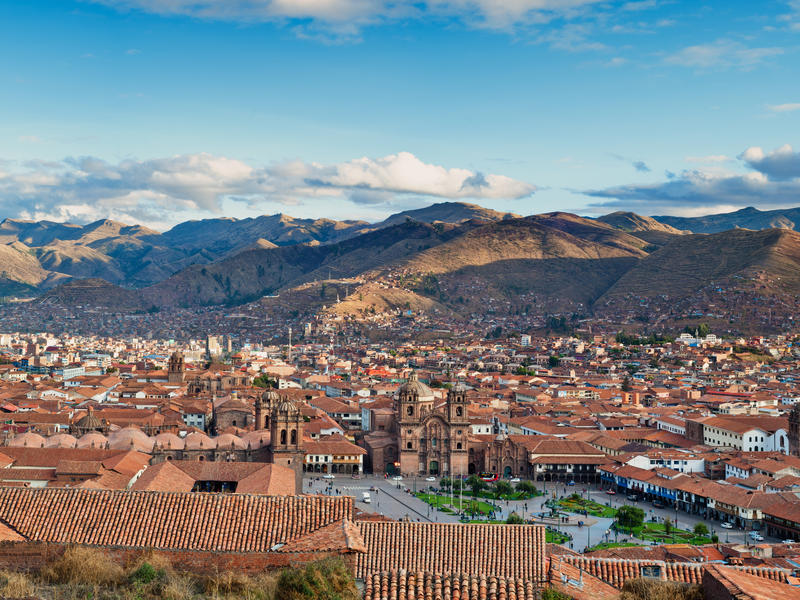
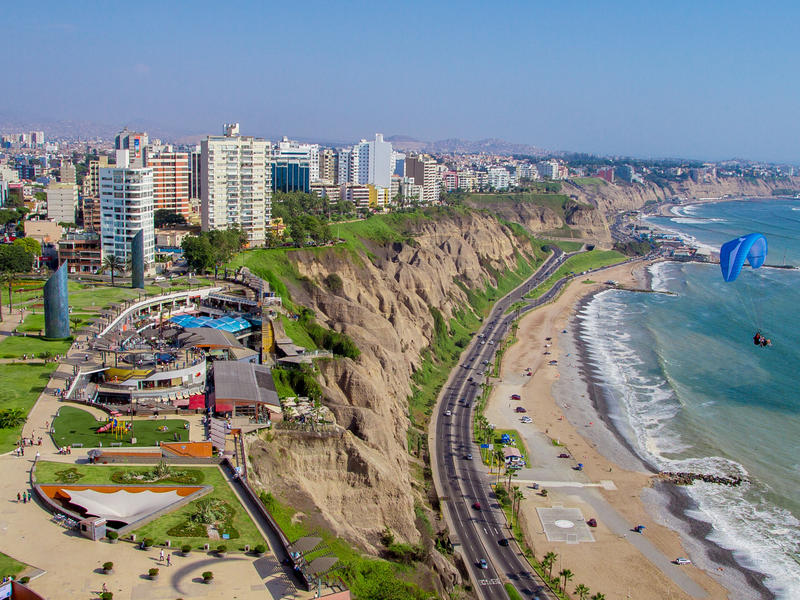
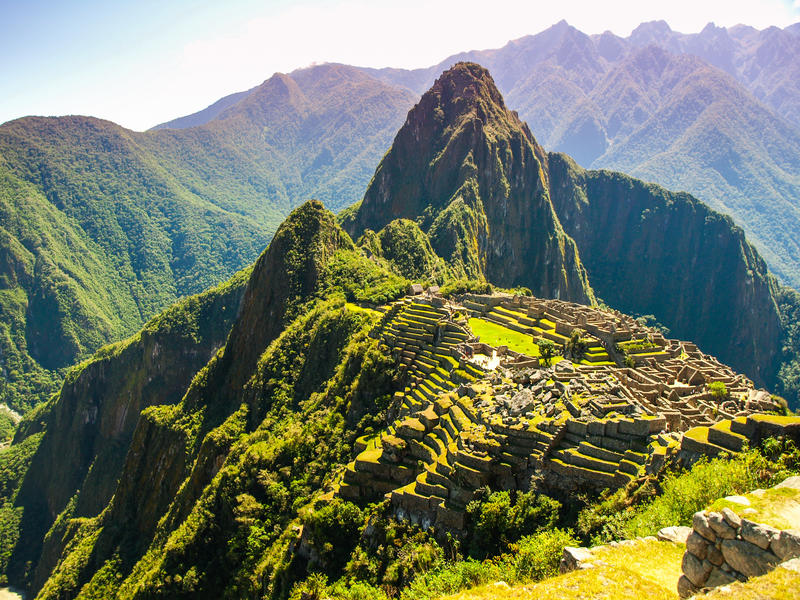
Peru is most famous for the sacred archaeological site of Machu Picchu – visited each year by scores of intrepid hikers who brave the Inca Trail’s arduous slopes to explore the age-old ruins. The country’s attractions extend far beyond the mystical allure of this legendary location and include palm-fringed beaches, quaint Andean villages and archaeological treasures that predate Machu Picchu by hundreds of years – all imbued with the nation’s rich melange of indigenous and colonial cultures. Equally enticing are the exotic reaches of Peru’s Amazon rainforest; Lima’s superb eateries, exquisite architecture and effervescent nightlife; the glittering, mountain-ringed waters of Lake Titicaca; and the vibrant city of Cusco, referred to by the Incas as ‘the centre of the world’.


Read More: Peru

Regions


  • Cusco
  • Lima
  • Placeholder image
  • Placeholder image
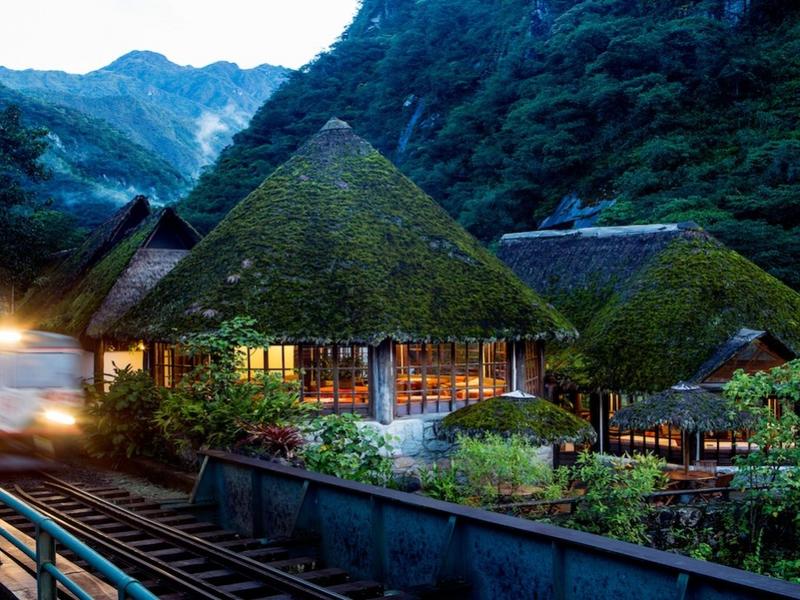
  • The Sacred Valley of the Incas

Travel Information


General

Language:Spanish is the official language, although various dialects of Quechua and Aymara are widely spoken in the Andes. There also 50 different indigenous…

Electricity

Plug Type: Type A, Type B Voltage (V): 220V Frequency Hertz (Hz): 60Hz *Travel plug adapter and voltage converter might be necessary depending…

Banking

Currency Local currency: Peruvian Sol Symbol: S/ ISO code: PEN Subunit: céntimo Banknotes: S/10, S/20, S/50, S/100, S/200 Coins:…

Cuisine

Food and water safety: Can you drink the tap water: No Fresh fruit and veg: Yes Ice: Yes Meat: Yes Street food: Yes Local…

Climate

Annual rainfall: Varies by region Average temperature: Varies by region Summer: Average highs: Varies by region Average lows: Varies…

Transport

Air: Main airlines: LATAM Airlines, Avianca International Airports: Jorge Chávez International Airport (Lima) Domestic Airports: Alejandro…

Dress

Spring and Summer Cool, light, breathable and comfortable: Yes Lightweight warm clothes: No Winter and Autumn Jerseys, cardigans, sweaters,…

Health

Please consult your health-care provider 4-6 weeks prior to travel to ensure you are receiving all required vaccinations and that the medication has…

Safety

Peru is safe in general. We recommend normal precautions be taken as you would for any city in the world. Be aware of your surroundings and stay in well-lit…

Visa

U.S. citizens do require a visa for entry into Peru. Non U.S. citizens should consult with your local embassy. Visas are free and are issued at the port…


Related Tours


  • Dear David Do you remember us? We spent our holyday in Namibia in 2007 following your itinerary. This email is to inform you, that advertising of your agency is now shown in the italian travel web magazine Viaggionelmondo.net In this…

    Carla and Riccardo

  • We just came back from a safari in Botswana, Namibia and Zambia, which was organised by Charlotte at ATI Holidays. We had a truly fantastic time, and would like to thank them for their help in organising it all. The…

    Matthew Haler

General

Language:Spanish is the official language, although various dialects of Quechua and Aymara are widely spoken in the Andes. There also 50 different indigenous languages in the Amazon region of Peru.National Emergency Numbers:Ambulance 117Police 105Fire Service 116Public Holidays:The dates of certain public holidays change from year to year – refer below. If a public holiday falls on a Sunday, then the Monday is also declared a public holiday.Jan 01 New Year’s DayVaries Good FridayVaries Easter MondayMay 01 Labor DayJun 28 Independence DayJun 29 Saint Peter and Saint Paul DayJun 29 Independence Day HolidayAug 30 Santa Rosa de LimaOct 08 Battle of AngamosNov 01 All Saints DayDec 08 Immaculate Conception DayDec 25 Christmas DayTime Zone:Peru is as USA Eastern Time Zone except between April and October when Peru is 1 hour behind USA Eastern Time Zone.TippingGratuities are left to your discretion and always appreciated. It is our recommendation that the quality of service should determine the extent of any gratuity. We are pleased to provide you with the following guidelines. Please feel free to offer more if you receive superlative service. For private tours, guides and drivers should be tipped separately and individually. US$ cash is accepted for gratuities as is local currency. When providing payment in US$ cash, please do not give dirty, torn or tattered bills or coins.• Private Tour Guides: US$10 per person for tour of 5 hours less in duration, US$15 per person for a tour of more than 5 hours. If the guide is accompanying you for several days, we recommend you tip when his/her services have ended.• Drivers on Guided Tours: US$5 per person for tour of 5 hours less in duration, US$10 per person for a tour of more than 5 hours. If the driver is accompanying you for several days, we recommend you tip when his/her services have ended. If the driver is also guiding, refer to guide gratuity recommendations above.• Tour Guides and Drivers on Shared Tours: US$10 per person to be distributed amongst guides and drivers and any other personnel involved with operating the tour.• Airport transfer drivers and Airport transfer representative: US$7 per person per transfer as long as transfer is between airport and hotels located within the city of arrival or departure. When transfers are to a destination outside of the city, we suggest US$10 per person. The gratuities will be shared between the representative and driver.US EmbassyMailing Address: Avenida La Encalada cdra. 17 s/n Surco, Lima 33, PeruTel: +51-1 618-2000Website: https://pe.usembassy.gov

Electricity

Plug Type: Type A, Type B 
Voltage (V): 220V 
Frequency Hertz (Hz): 60Hz 

*Travel plug adapter and voltage converter might be necessary depending on your appliances. 

Banking

Currency 

Local currency: Peruvian Sol 
Symbol: S/ 
ISO code: PEN 
Subunit: céntimo 
Banknotes: S/10, S/20, S/50, S/100, S/200 
Coins: céntimo, S/1, S/2, S/5 

Banking 

Card Transactions: Yes 
ATMs: Yes 
Mastercard: Yes 
Visa: Yes 
American Express: Yes 
Diner’s club: No 

Banking Hours: 
Weekdays: 9:00 AM - 5:00 PM 
Weekends: Closed 
Public Holidays: Yes 
Foreign exchange services: Yes 

Cuisine

Food and water safety: 

Can you drink the tap water: No 
Fresh fruit and veg: Yes 
Ice: Yes 
Meat: Yes 
Street food: Yes 

Local cuisine: 

Peruvian cuisine is diverse and flavourful, featuring influences from indigenous, Spanish, African, and Asian cuisines. Highlights include ceviche (marinated raw fish), lomosaltado (stir-fried beef), and causa (layered potato dish). Notable local drinks include Pisco Sour (cocktail), chicha morada (purple corn drink), and Inca Kola. 
Tipping: 10% 

Climate

Annual rainfall: Varies by region 
Average temperature: Varies by region 

Summer: 

Average highs: Varies by region 
Average lows: Varies by region 

 Winter: 

Average highs: Varies by region 
Average lows: Varies by region 

Best time to visit: 

The best time to visit Peru is during the dry season, from May to September, when the weather is generally sunny and dry, making it ideal for outdoor activities and exploring the ancient ruins. 

Transport

Air: 

Main airlines: LATAM Airlines, Avianca 
International Airports: Jorge Chávez International Airport (Lima) 
Domestic Airports: Alejandro Velasco Astete International Airport (Cusco), Rodríguez Ballón International Airport (Arequipa), Capitán FAP Carlos Martínez de Pinillos International Airport (Trujillo) 

Road: 

Driving on the: Right 
Tar roads: Yes 
Gravel roads: Yes 
Valid International Driver's License needed: Yes 
Car hire available: Yes 
Taxis: Yes 
E-hailing services: Yes 

Bus: 

Inter-city bus services: Yes 
Local city bus networks: Yes 

Rail: 

Railway system: Limited 
Subway System: No 

Water: 

Ferries: Limited 
Water taxis: Yes 
Leisure cruises: Limited 

Dress

Spring and Summer 

Cool, light, breathable and comfortable: Yes 
Lightweight warm clothes: No 

Winter and Autumn 

Jerseys, cardigans, sweaters, jackets: Recommended 
Heavyweight clothing and boots: Yes 

General 

Umbrella and raincoat: Yes 
Warm gloves, hat and scarf: No 
Swimming costume (bathing suit): Yes 
Hat, sunglasses and sunblock: Yes 
Walking shoes: Yes 
Casual: Yes 
Smart-casual attire: Yes 

Health

Please consult your health-care provider 4-6 weeks prior to travel to ensure you are receiving all required vaccinations and that the medication has enough time to take effect. We highly recommend the purchase of travel insurance with medical benefits and that you bring any personal medication with you. Please also check with your health department prior to departure for any changes in health regulations.

The Amazon

Visitors are advised to take precautions if planning to travel to the Amazon region for several days. Precautions against malaria and immunization against typhoid, tetanus, Hepatitis A and yellow fever is sensible (though not required). It is recommended not to use tap water for drinking or tooth brushing.

Risk of Altitude Sickness

The most common ailments for travelers to Peru is altitude sickness. Altitude sickness can strike even the fittest, healthiest traveler. As soon as you pass the 8,000 feet mark, you are at risk from acute mountain sickness (AMS), the mildest and most common form of the condition. More severe forms also exist: high altitude pulmonary oedema (HAPE) and high altitude cerebral oedema (HACE). Both can occur near 8,000 feet, but are more common at heights of about 12,000 feet (3,600m) and over.

There is no way to know beforehand if you are susceptible to altitude sickness. According to the Centers for Disease Control and Prevention, “how a traveler has responded to high altitude previously is the most reliable guide for future trips, but is not infallible.”

Altitude Sickness Symptoms and Treatment
Symptoms of acute altitude sickness include:

headaches
nausea
vomiting
dizziness
lethargy
poor sleep
loss of appetite

The www.altitude.org website describes the symptoms as “very similar to a really bad hangover.” The two more severe forms of altitude sickness, HAPE and HACE, show similar, albeit heightened, symptoms, sometimes with additional symptoms such as a severe cough, blue lips or irrational behavior.

In all cases, the best treatment is descent. If heading to a lower altitude isn’t an option, stay where you are and rest for a day or two. Acetazolamide (diamox) tablets can also help. Whatever you do, don’t go any higher.

Altitude Sickness Prevention
Successful prevention is obviously preferable to treatment, so keep the following guidelines in mind before heading to high altitude locations:

A slow ascent is always the best option. Whenever possible, give your body time to adjust to the altitude. Proper acclimatization is the best defense against altitude sickness.
Take it easy for the first 24 hours at altitude -- don’t overexert yourself and don’t go any higher. This is particularly important if you are flying.
Avoid alcohol, tobacco and sleeping pills. Keep yourself hydrated by drinking plenty of water.
Eat high-carbohydrate foods (such as pasta, potatoes and bread).
Drink coca tea or chew coca leaves upon arrival at altitude and during your stay. While largely unproven scientifically, the locals swear by it. Be aware that coca leaves, while legal in Peru, can make a drug test prove positive for cocaine.
Medication is also an option. Acetazolamide (diamox) is the most common type of “soroche pill.” Further options exist, but they are no substitute for proper acclimatization. Always consult your doctor before taking altitude sickness medication.

High Altitude Destinations in Peru
Altitude sickness won’t be an issue in towns and cities located along the coast and in the lowland jungle regions of Peru. In the highlands, however, you can soon find yourself at heights of 8,000 feet (2,500m) and above -- the point at which altitude sickness can occur.

Safety

Peru is safe in general. We recommend normal precautions be taken as you would for any city in the world. Be aware of your surroundings and stay in well-lit areas. Don’t flash wealth. If you have items of sentimental value, leave it at home. Visitors should avoid all political gatherings and demonstrations.

Visa

U.S. citizens do require a visa for entry into Peru. Non U.S. citizens should consult with your local embassy.

Visas are free and are issued at the port of entry. Your length of approved stay will be determined by border officials at the time of entry, and can range from 30 to 183 days. Extensions for tourists are usually not approved, and overstays result in fines. Be sure your date and place of entry is officially documented by Migraciones (Immigration), whether you arrive at a port, airport, or land border.

Travel with Minors

Regardless of nationality, all children who are traveling with both birth parents are required to have a valid passport and the necessary visa or citizenship of the country where they are traveling. Peruvian immigration procedures are complex for minors traveling without one or both parents/legal guardians.

Resident outside of Peru

Children with only U.S. citizenship when traveling without one or both parents/legal guardians:

Entry as a tourist for a stay of less than 183 days:

Generally not required to have additional documentation.

Entry as a tourist with a stay of over 183 days:

Required to have a Permiso Notarial de Viaje (see below).

Resident in Peru

Peruvian citizen (even if also a U.S. citizen) children traveling without one parent/legal guardian:

Required to have a Permiso Notarial de Viaje from the non-traveling parent.

Peruvian or dual nationality children whose parent has sole custody:

Must provide the appropriate legal documentation (foreign court-approved custody document stating sole custody/death certificate/Peruvian court-approved document for travel/birth certificate listing only one parent).

Peruvian or dual national stepchildren and wards traveling with one stepparent and neither birth parent:

Required to have a Permiso Notarial de Viaje signed by both birth parents.

Peruvian or dual national children traveling within and/or out of Peru without both birth parents:

Required to have a Permiso Notarial de Viaje signed by both birth parents.

A Permiso Notarial de Viaje is a written, notarized authorization from the non-traveling parent(s). Peruvian immigration will not accept a document notarized by the U.S. Embassy or a document notarized by a U.S. notary in lieu of a Permiso Notarial de Viaje. Please be aware that these authorizations are valid for 30 days and one trip only.

How to get a Permiso Notarial de Viaje:

In the United States, at the nearest Peruvian Consulate. There are multiple locations.
In Peru, at most Peruvian notaries.    

The Embassy is unable to assist travelers who are prevented from traveling for lack of a Permiso Notarial de Viaje.